Why Matching Mortar Is the Most Important Step in Repointing
We get called to fix a lot of previous repairs. One of the most common, and most preventable, problems we see is historic brick that has been repointed with hard modern mortar. Within a few seasons, the brick faces begin to spall off in flakes, and the wall looks worse than before the repair. The cause is almost always a mortar mismatch.
Mortar is the sacrificial element of a masonry wall. It is intentionally softer than the brick so that it weathers and fails first, protecting the more valuable units. Historic brick was fired at lower temperatures and is relatively soft. Historic mortar was lime-rich and flexible, allowing the wall to breathe and to accommodate small movements without cracking the brick. When you repoint that wall with a stiff Portland cement mortar, you reverse the relationship. The mortar becomes harder than the brick, moisture gets trapped, and during freeze-thaw the brick faces pop off.
This is why mortar analysis is the first step in every repointing project we take on. We take a sample of the original mortar, identify its composition, and design a new mix that matches in strength, color, and texture. For many historic buildings in Harford County, that means a lime-based mortar rather than a modern masonry cement. The difference is not aesthetic. It is the difference between a repair that lasts decades and one that destroys the wall. Our masonry repair process is built around this principle.
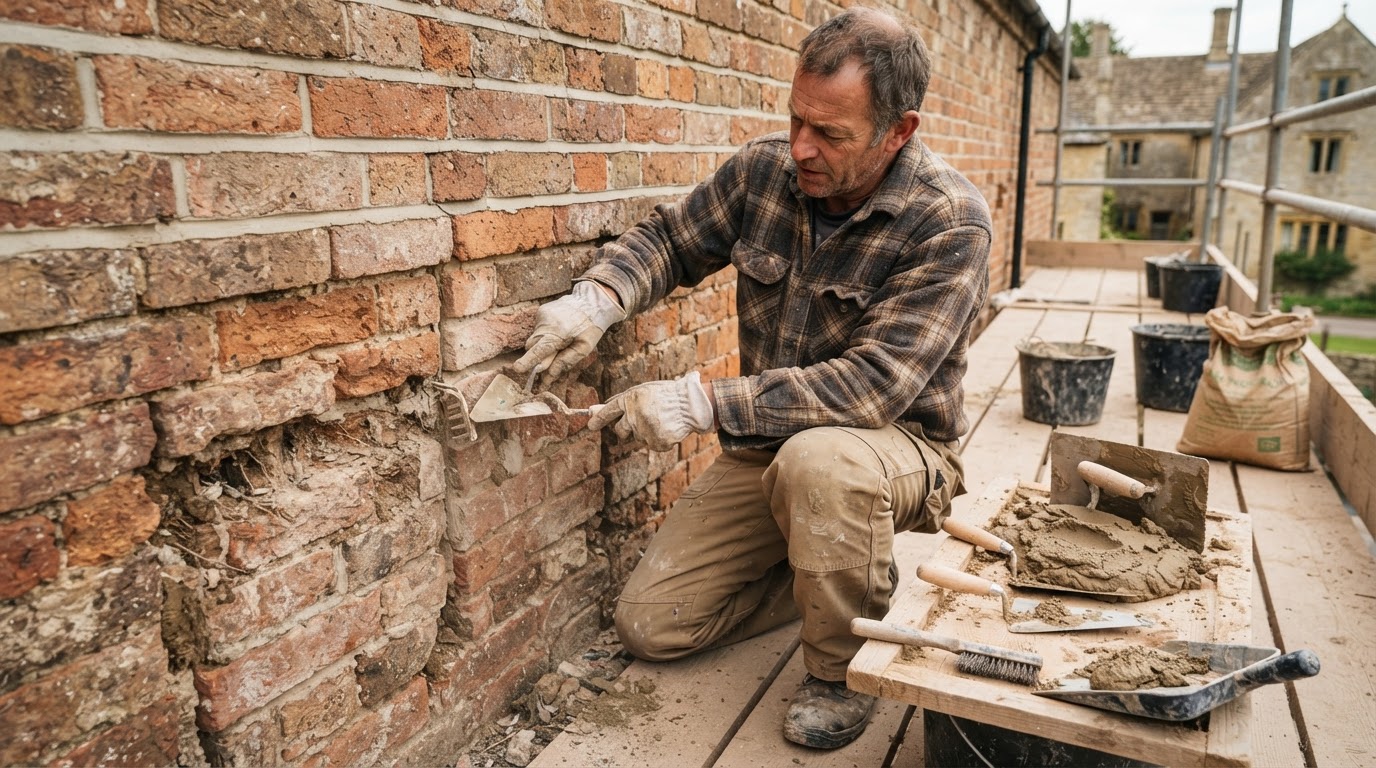
On a recent project, a homeowner had hired a general contractor to repoint a 1920s brick wall. The new mortar was gray, hard, and already causing spalling at the joints. We removed the incompatible mortar carefully, without damaging the already weakened brick, and repointed with a matched lime mortar. We also replaced the worst-spalled units with salvaged brick. The wall now breathes correctly, and the remaining brick is protected rather than attacked.
Matching mortar also means matching appearance. A repointing job that stands out as obviously newer reduces the value of the building, especially for historic properties. We blend sand color, binder, and tooling profile so the new joints integrate with the old. Done well, the repair should be nearly invisible from a few feet away. See examples of this craftsmanship in our case studies.
If your building has been repointed recently and you are seeing brick spalling, or if you are planning a repointing project, ask your contractor about mortar analysis. If they cannot tell you the composition of your existing mortar, that is a red flag. Reach out to us for an honest second opinion.
Good repointing is invisible and permanent. Bad repointing is obvious and destructive. The difference is almost entirely in the mortar.