How We Saved a Crumbling Historic Brick Facade in Bel Air
When the owner of a historic Main Street building in Bel Air called us, the situation was urgent. Mortar had eroded to the point that bricks were loosening along the parapet, and every rainstorm sent water behind the wall. The fear was that a full teardown might be the only option. It was not.
Our first step was a hands-on condition survey. We sounded the wall, mapped every crack, and analyzed a mortar sample to identify the original composition. That last step matters more than most owners realize. Modern Portland cement mortar is harder than the soft, lime-rich mortar used in historic brick. Repointing with the wrong mix traps moisture inside the wall and actually spalls the brick faces off, accelerating the very damage you are trying to stop.
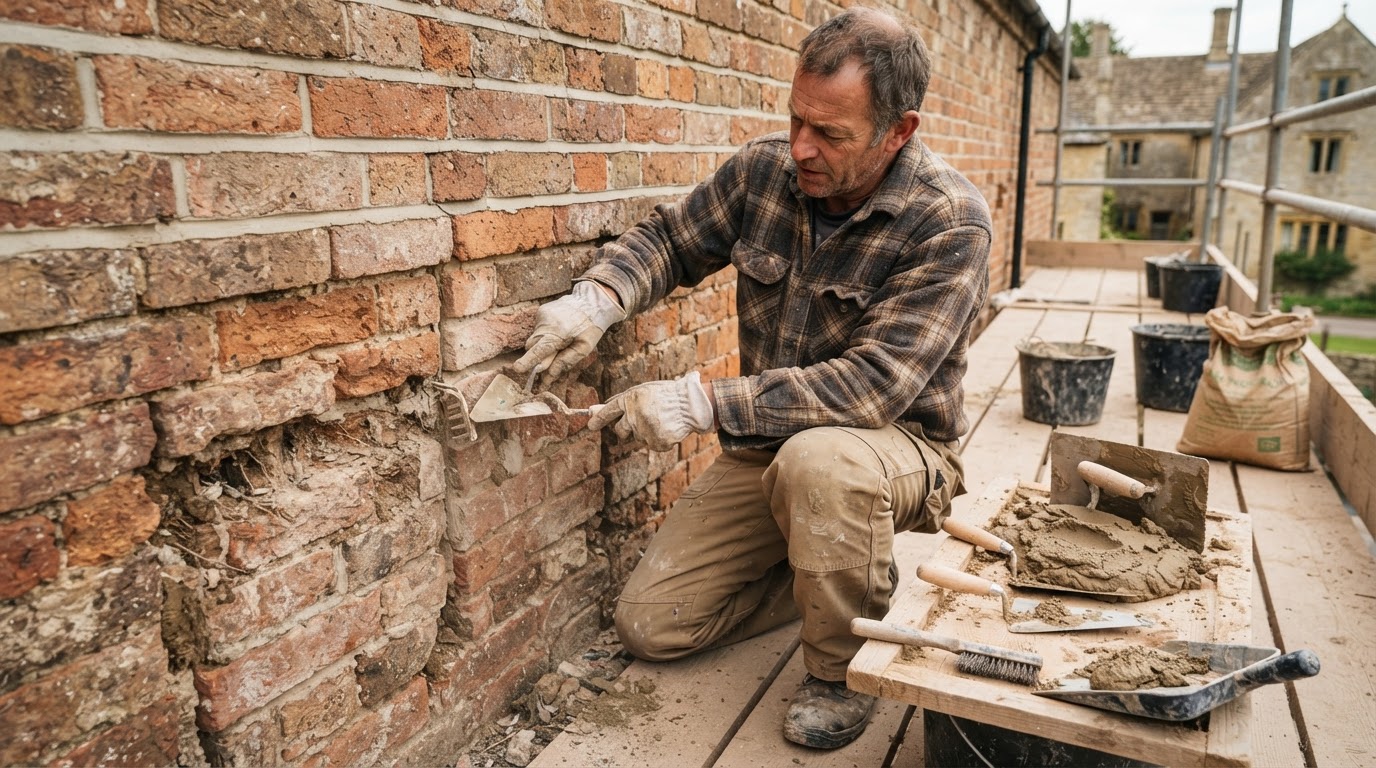
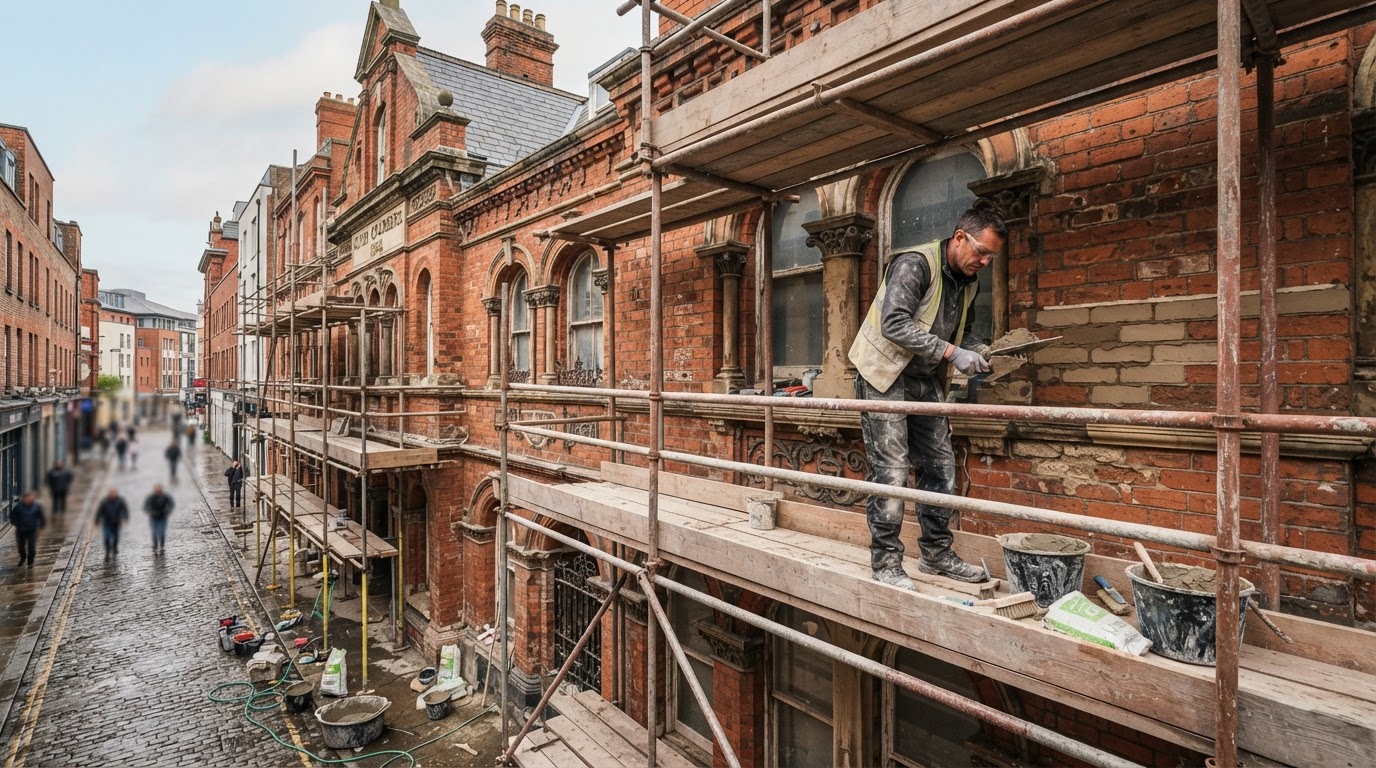
Once we confirmed a compatible lime mortar, we developed a phased plan that kept the ground-floor storefront open for business throughout. Work proceeded bay by bay. Joints were raked to a depth of roughly twice their width, dusted, and misted before new mortar was packed in layers and tooled to match the original concave profile. Damaged units were replaced with salvaged brick matched for color and texture so the repairs disappear into the wall.
The project took several weeks, but the result speaks for itself. The facade sheds water the way it was designed to, the parapet is stable, and the building's historic character is intact. The owner avoided a six-figure replacement and gained decades of additional service life. You can see similar outcomes in our case studies, and the methods are detailed on our masonry repair service page.
There is a lesson here for any owner of an older masonry building in Harford County. Eroding mortar is not a cosmetic issue. It is the wall telling you its sacrificial layer has done its job and needs renewal. The longer it waits, the more brick you lose and the more water reaches the structural backup. Caught early, repointing is a modest investment. Caught late, it becomes a reconstruction.
We approach every historic structure with respect for its fabric and the techniques that built it. If your building is showing signs of mortar loss, efflorescence, or spalling, the right move is a professional assessment before the next freeze-thaw cycle. Request a call back and we will schedule an on-site evaluation, usually within a week.
Historic buildings carry value that cannot be replaced once it is lost. Our job is to make sure you never have to find out what that loss costs.