Cleaning Historic Stone Without Destroying It
A property manager called us after a well-meaning maintenance crew pressure-washed a historic limestone entrance. The grime was gone, but so was the surface of the stone. What had been crisp carved detail was now fuzzy, eroded, and permanently damaged. Unfortunately, this is a story we hear often. Aggressive cleaning is one of the most common ways historic masonry is ruined.
Historic stone and brick were made to be soft, breathable, and somewhat porous. That porosity is part of how they manage moisture. High-pressure washing, abrasive blasting, and strong chemical cleaners all attack that surface. They remove the hardened skin of the stone, expose the softer interior, and drive water and cleaning chemicals deep into the wall where they cause salt deposits and spalling. The building may look clean for a season, but the damage is irreversible.
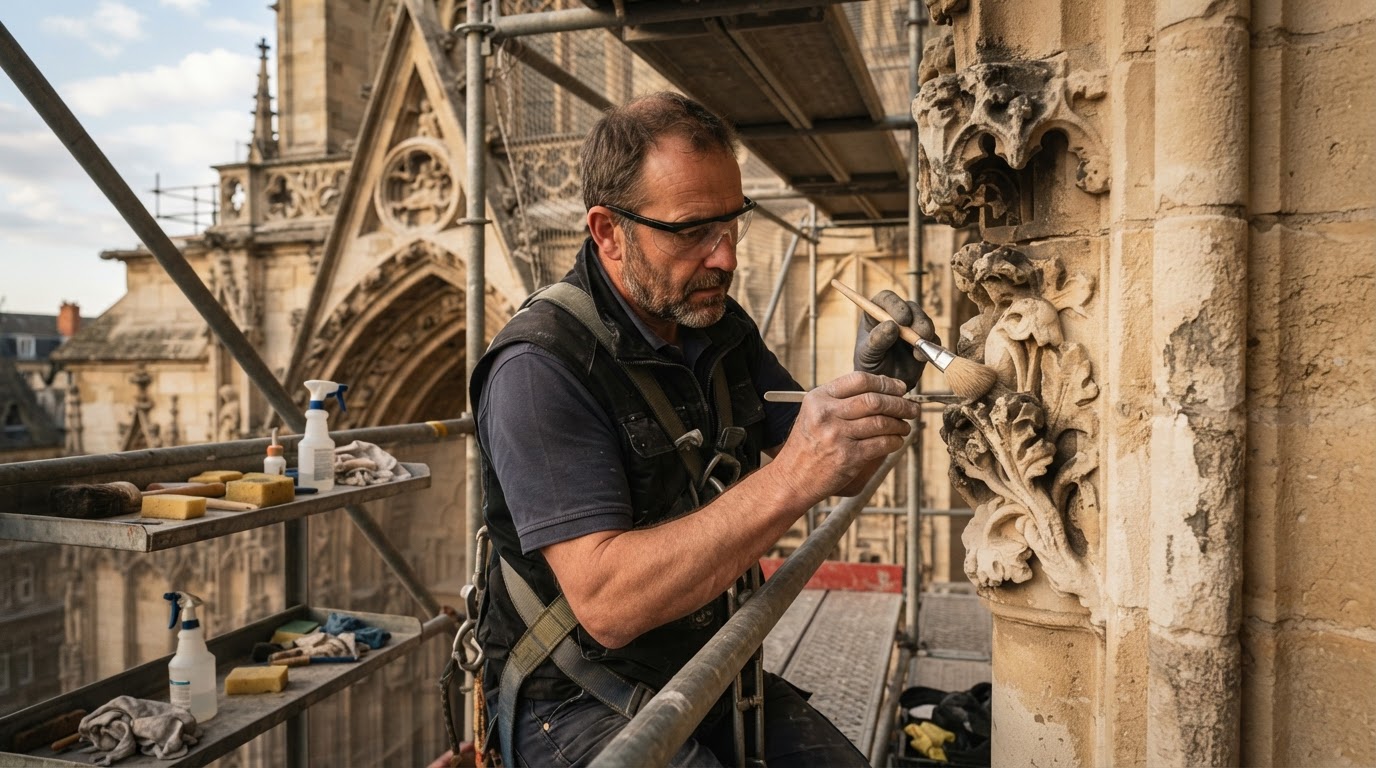
Our approach to cleaning historic masonry is the opposite of aggressive. We start by identifying the soiling. Is it carbon pollution, biological growth, efflorescence, or paint? Each requires a different response. We test the gentlest effective method in an inconspicuous area before committing to the whole facade. Often that means low-pressure water, soft brushes, and proprietary mild cleaners that are then thoroughly rinsed. For biological growth, we use biocidal treatments. For paint, we use gentle, solvent-based removers designed for historic substrates rather than scraping. These methods are central to our historic preservation practice.
On the limestone entrance project, we could not undo the erosion, but we stabilized the surface, applied a breathable consolidant to slow further loss, and established a gentle maintenance cleaning schedule so the building stays presentable without repeated damage. The property manager now has a plan that protects the asset rather than degrading it. The lesson is that cleaning is a preservation decision, not a janitorial one.
Breathability matters after cleaning, too. We never apply waterproof coatings that trap moisture on historic masonry. If water repellency is needed, we use silane-siloxane treatments that shed rain while still allowing vapor to escape. This prevents the freeze-thaw damage that sealed walls suffer. You can learn more about these surface treatments through our waterproofing services.
If you are considering cleaning a historic building, treat it as a restoration project, not a wash. Specify methods, test first, and hire a team that understands historic materials. Contact us for a cleaning assessment that respects your building's age and fabric.
The goal of cleaning a historic building is not to make it look new. It is to reveal the character it has earned, without taking any more of it away.