Why Failed Expansion Joints Cause So Many Building Leaks
A commercial building owner was spending money on leak repairs every year, always at the joints between concrete panels. Each time, a contractor caulked the visible gap, and each time the leak returned the next season. The problem was not the caulk. It was that the expansion joint system had failed, and surface caulking cannot replace a properly engineered joint.
Expansion joints exist because buildings move. Concrete expands in heat, contracts in cold, and deflects under load. Without joints designed to absorb that movement, the building cracks itself apart. A proper expansion joint has three components: a backer rod that gives the sealant the right shape, a sealant that bonds to the joint faces and stretches with movement, and a design that accommodates the expected joint width change. When any of these fail, water gets in.
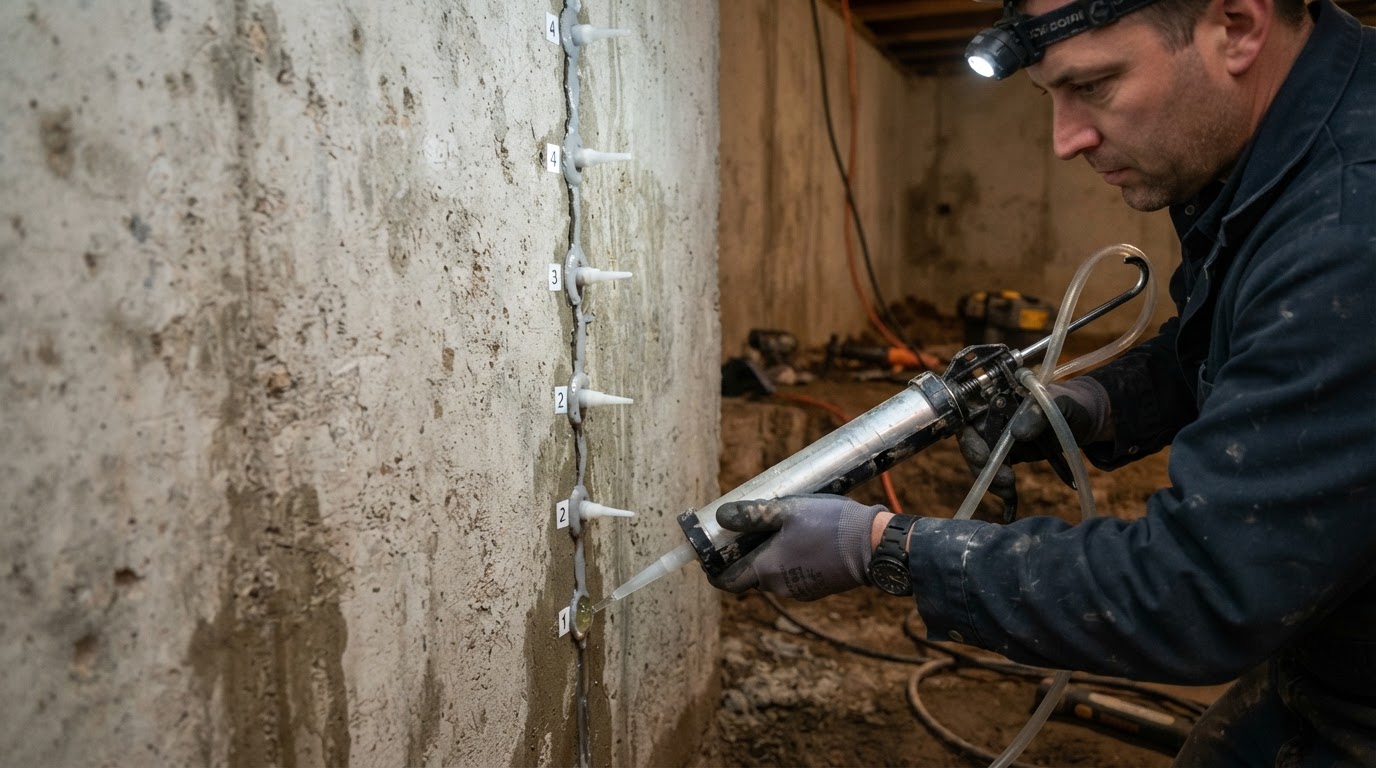
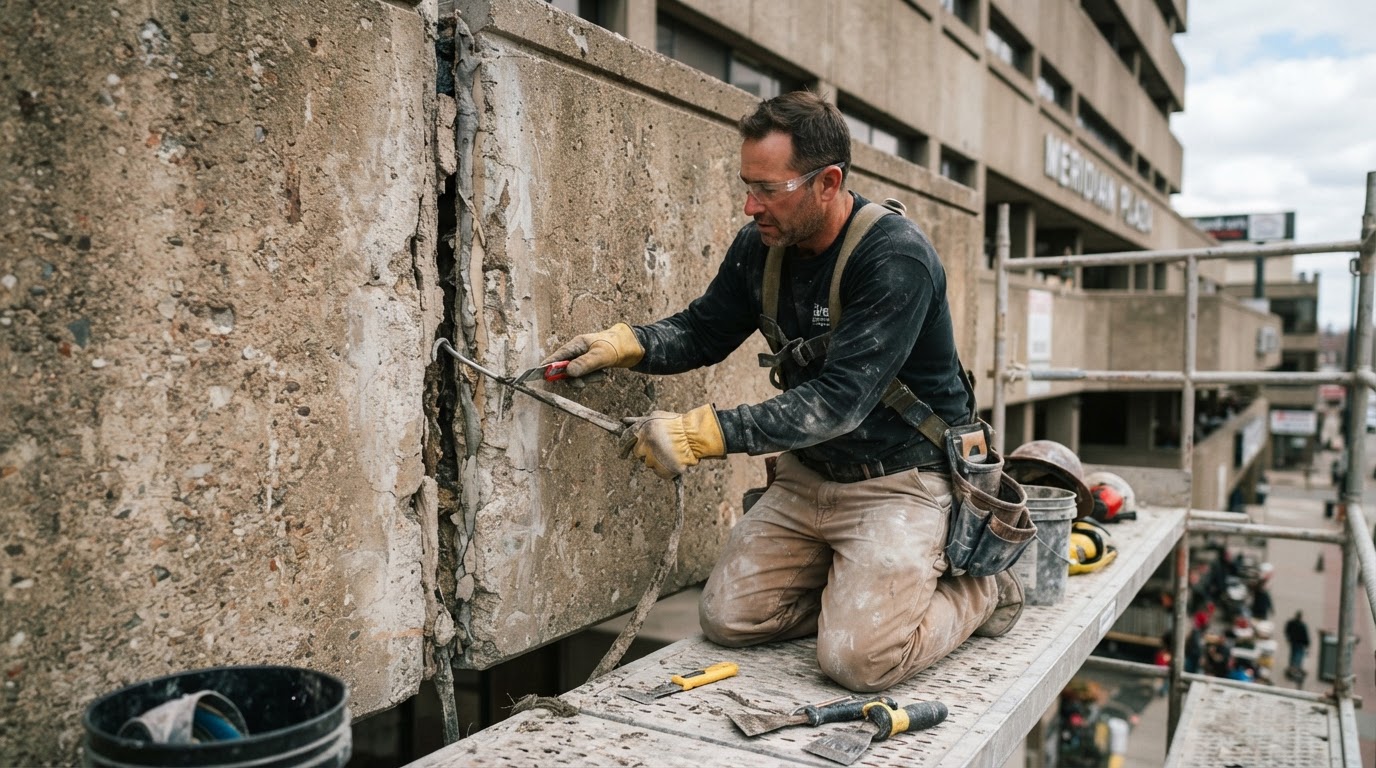
On this building, the original sealant had aged past its service life. It had lost elasticity, pulled away from the joint faces, and in places fallen out entirely. The backer rod beneath had degraded. Previous repairs had simply smeared new caulk over the old, which is why they failed. Our approach was to remove all the failed material down to clean substrate, install new backer rod sized correctly for the joint, and apply a high-performance sealant selected for the joint's movement and exposure. The full system is detailed on our waterproofing services page.
We worked joint by joint so the building stayed weathertight throughout. At each joint we verified the width and movement, because a sealant rated for a certain movement range only performs if the joint is within that range. Where joints had widened beyond the sealant's capacity, we recommended a different profile or a redesign. This attention to engineering is what separates a joint that lasts a decade from one that fails in a year.
After the project, the leaks stopped. The owner finally had a building that shed water at the joints as designed, and the annual repair budget dropped to a routine inspection. We set up a maintenance schedule to catch sealant aging before failure, because even the best sealants have a finite life. For tracing leaks that have already caused interior damage, our leak repair services complement this preventive work.
If your building leaks at the joints, or if your sealant is cracking, shrinking, or pulling away, the answer is a full joint renewal, not another layer of caulk. Request a call back and we will assess the joints and recommend the right system.
Sealant is not a gap filler. It is an engineered component. Treat it that way and your building stays dry. Treat it as caulk and you will be back every season.